For such a small little city, there is such much to do in Bruges (also spelled Brugge)! It is one of our favourite places we’ve visited because it is just so beautiful. It really does feel like a fairy tale town as you’re walking around. Apart from the beautiful views, it’s also a great base for some Belgian day trips, and has some wonderful food.
If, like us, you’re based in London, you can reach Bruges so easily on the Eurostar. It’s so much more convenient than flying, and you get to see some beautiful countryside on your journey.
In this post:
- Walk around the gorgeous streets
- Go up the Belfry Tower
- Head out on a day trip
- Get some waffles and chocolate
- Visit some of the amazing museums
Walk Around the Gorgeous Streets
Cost: Free
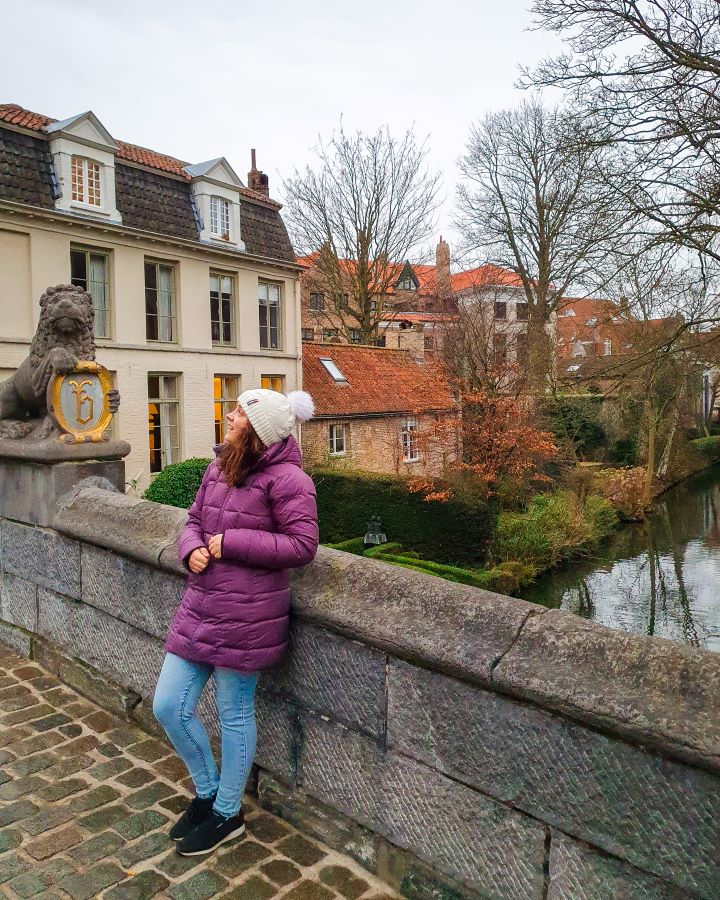
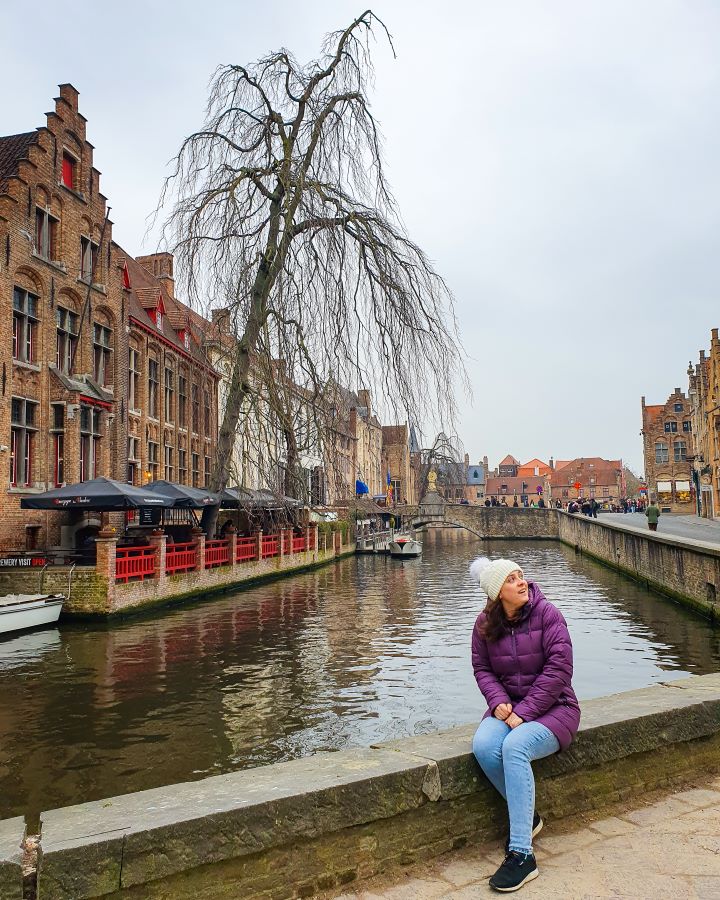
Bruges is one of the most gorgeous European cities, in our opinion. Walking around is literally like stepping into a fairy tale. A lot of this has to do with the fact that it was once a walled city. Everything inside the original walls has been preserved. The entire city is actually a UNESCO World Heritage Site.
There are four remaining gates in the city from the 13th century: Kruispoort, Ezelpoort, Smedenpoort and Gentpoort Gate. It also has 4 remaining windmills of the original 25 that used to circle the city. These are a must see on a walk along the former walls, which loops around the main city of Bruges.
City Centre
The actual city has so much to see, including many beautiful bridges over the canals, Grote Markt, the Basilica of the Holy Blood, the Belfry Tower, and Gruuthuse Hof (a beautiful building that is now a famous photo spot).
Honestly, the architecture of the entire city is so magical, especially around Grote Markt. We’re sure you will spend hours walking around, admiring, and taking photos of everything because it is all so gorgeous. You can also go on canal boat tours that looked very popular while we were there!
City South
The south of the city is also worth a visit. There, you can find an area called Minnewater park which is a beautiful park and garden absolutely filled that swans. We would definitely recommend keeping your distance from as they’re not very friendly haha.
Next to this park is another area we’d recommend visiting. It’s a fascinating area called Beguinage, which feels like going back in time. It’s an old complex of buildings occupied by nuns and religious women. While entry is free, please be respectful and quiet while you do so as it is still a residence. This results in a peaceful oasis in the middle of busy Bruges and is definitely worth a visit both for the quiet and also for the interesting history of Beguinage.
Go Up the Belfry Tower
Cost: €15 per person
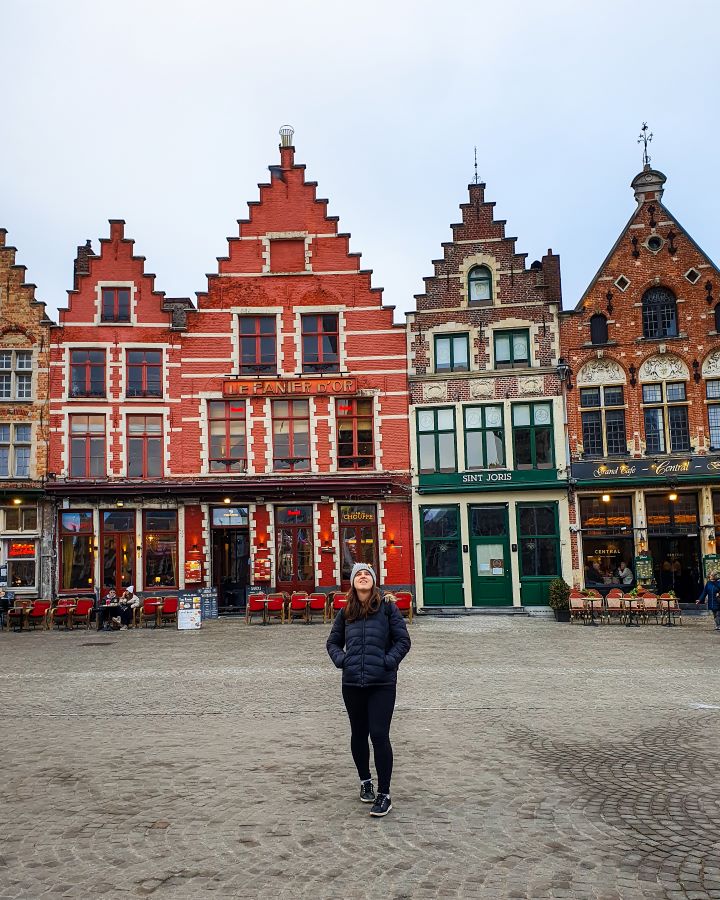
The Belfry Tower is a landmark you absolutely cannot miss when you visit Bruges. We mean you literally cannot miss it, because it towers over a lot of the city. The tower is an old Medieval bell tower that has a huge 47 belled carillon at the top. You will find the entrance of Grote Markt.
Of course, you can admire the tower from the outside, but like most bell towers you will find in European cities, you can also climb it to get some beautiful views. Almost every European city we visited had a tower you could climb, and we were selective about which we did. We did the Belfry because we thought seeing the gorgeous architecture of the city from above would be worth it. It really was!
Climbing the Tower
To climb the tower, you’ can’ll need to buy a timed entry tickets on the Bruges Museum website. They cost €15 per person for an adult ticket. You can also buy tickets at the machines at the main tower if you want to buy them in person. Tickets are the same price regardless of how they are purchased. We bought our tickets on the day we visited in February, but they can sell out a few days in advance during busier times.
The tower is unfortunately not wheelchair accessible. It has 366 steps up winding and small staircases, so is definitely a bit of a challenge. It does have platforms to rest along the way, including a few small rooms, so you can take your time. Once at the top, you’ll have a wonderful view over Bruges and the surrounding countryside. The bells chime every 15 minutes, so there’s a good chance they will go off while you’re at the top. They are very loud from up there, so be prepared for a shock haha. We spent probably one hour in total between starting the climb and reaching the bottom again.
Day Trips
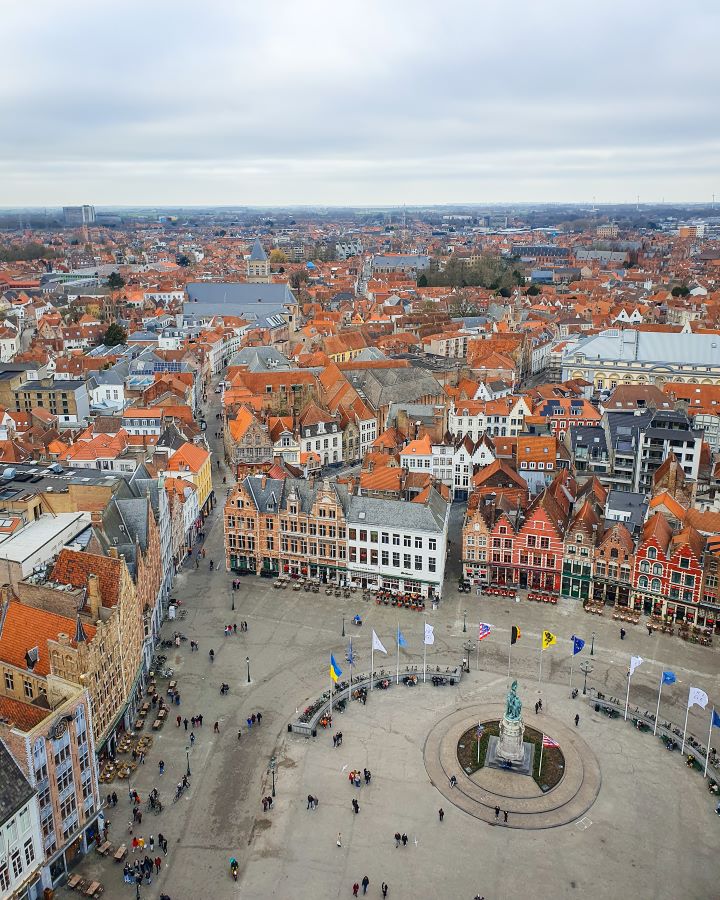
While Bruges is absolutely lovely, one of the advantages of Belgium is that it is so small that you can day trip to other beautiful Belgian cities so easily! You could even pretty easily day trip to France or The Netherlands! For now, we’re going to discuss day trips to Ghent, Brussels and Antwerp. We visited each of these cities during our time in Belgium.
Ghent
Ghent is the closest to Bruges and takes only 25 minutes each way on the intercity (IC) train. We booked online a day or two before, so this doesn’t need to be planned too far in advance. There’s heaps of trains going between the two cities every hour, so you can organise last minute.
The beauty of Ghent is that while it is so close to Bruges, it is so different! It is a bigger city and while there are lots of beautiful old buildings, there are also a lot more modern buildings dotted around too.
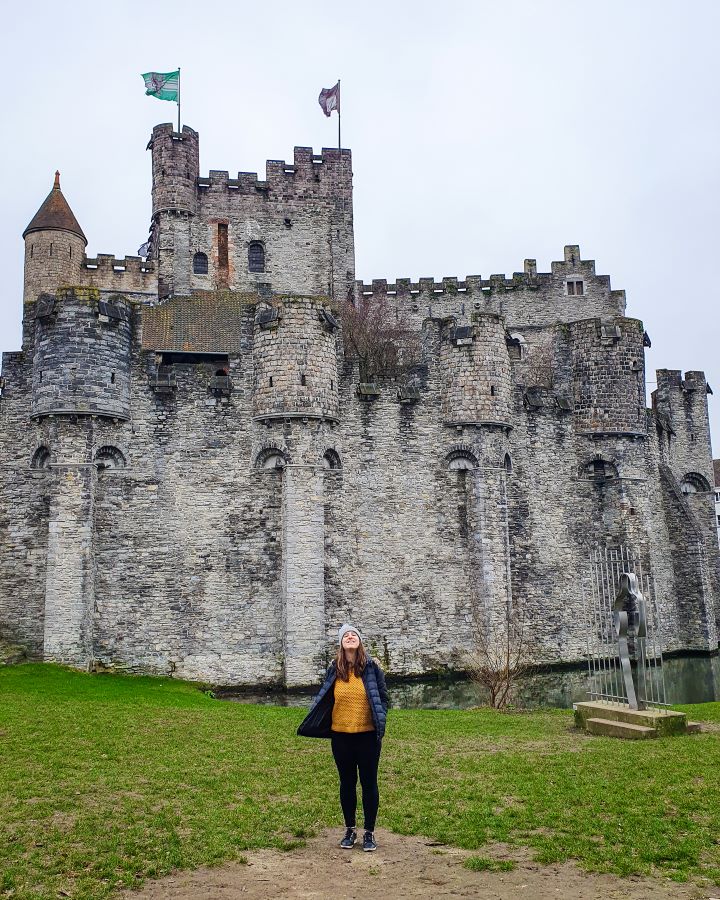
Our favourite thing to do in Ghent was to walk along the Leie River and take in the amazing architecture. We wandered the cute little streets and visited the Gravensteen, a castle that had one of the best audio guides we’ve ever listened to. A local comedian narrates it, and it has beautiful soundscapes to really set the scene. The guide really made the castle tour so much more interesting! It was an experience we will remember for a while, plus it only took about an hour and a half. We bought tickets to the castle at the entry, which were €13 each. Tickets are also available online, and you might be eligible for a discount, so check out their website just in case.
Even without visiting the Gravensteen, we’d still recommend at least half a day in Ghent to walk around and explore the city.
Brussels
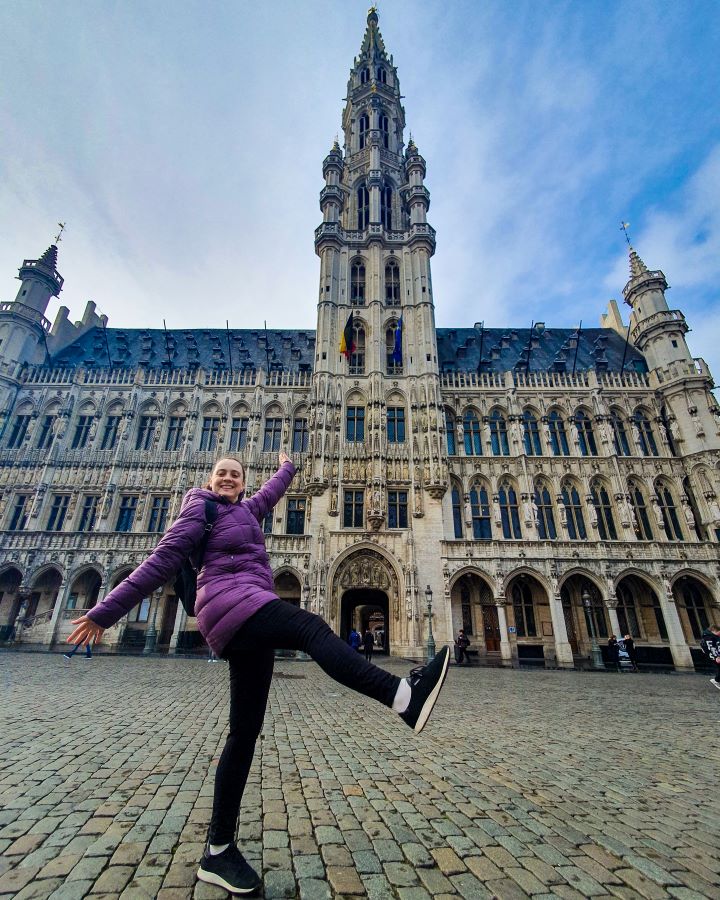
Trains to Brussels from Bruges are available on the IC website and the journey is one hour each way. Brussels is split into an old town and a new town. We would definitely recommend spending most of your time in the old town. We actually have a whole post on what to do in Brussels if you’re spending a bit of time there!
The streets of the old town wind around and are just magical to walk around. Make sure to check out the Grand Place, the Royal Gallery of Saint Hubert and the Mont des Arts Garden. Brussels also has a unique trio of famous sculptures, two of which are also fountains: Manneken Pis and Jeanneke Pis, and Het Zinneke, which are exactly what it sounds like in English. The first and original is a little boy peeing, then a little girl peeing, and finally a dog peeing.
The little boy fountain dates back to as early as the mid 15th century but the one currently there is a replica from 1965. The original had been stolen and damaged, but it’s now in the Brussels City Museum. In 1987, the female equivalent was built and placed in another part of the old town. It is also a fountain but is less grand than the male fountain. The dog statue, which is just a sculpture, was built in 1998.
As you’re walking around the beautiful old town and trying not to walk into every chocolate shop you walk past (and there are a lot), these sculptures are quite fun to keep an eye out for.
Again, we would recommend at least a half day or a full day to explore Brussels. There are many museums you can visit if you have more time.
Antwerp
Lastly for the day trips is Antwerp, which can again be reached by train. You can book this train through IC, but this train takes an hour and a half each way and does go through Ghent. It is a bit of a longer day trip, but still absolutely doable. When we were in Belgium, we actually stayed in Brussels for a few days and day tripped to Antwerp from there, which is a quicker option.
Funnily enough the most recommended thing to do in Antwerp is to see the train station. If you come via train, that’s easy to do. The station opened in 1905 and is a blend of a different architectural styles, with a beautiful iron and glass dome on the top. It’s truly is a wonderful place to start your day trip.
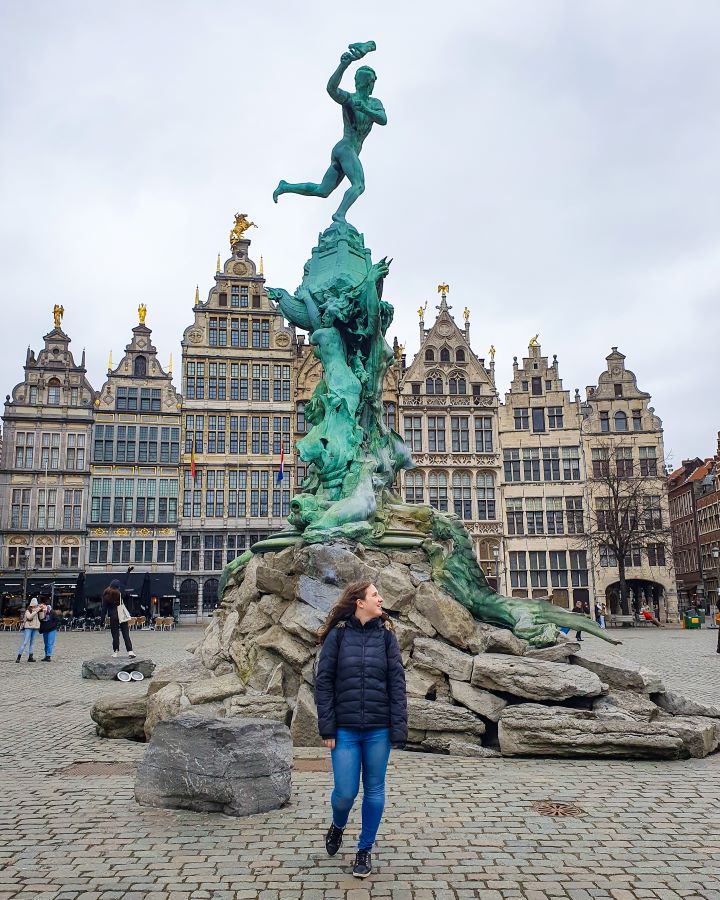
Like the other cities, Antwerp is a mix of old and new buildings. If you walk from the station down to the Scheldt River you’ll pass through a lot of the old town, where there are a lot of great things to see. There is the Sint-Jacob Antwerpen church, the Saint Charles Borromeo Church, Brabo’s Monument and down on the river bank, the Medieval fortress Het Steen. Het Steen is free to enter and is worth a look around! We spent a few hours walking around Antwerp, but it doesn’t need as long as the other two cities.
They all have beautiful architecture, the cutest little streets and lots to see and do. No matter which you choose to visit you will have a wonderful day out!
Get a Waffle and Lots of Chocolate (Duh)
Cost: €3 per waffle from Australian – Belgian Waffles and Ice Cream
Now listen, this isn’t us recommending for you to eat waffles and chocolate in Belgium. That’s a given and we know you were going to do that anyway (as you should). This is more of a recommendation of what types of those things to get, based on our experience.
Waffles
When we first got to Belgium, we saw stores everywhere with rows and rows of rectangular shaped waffles with every type of topping you can imagine. We were sold! But honestly, the fancy ones with all the toppings aren’t what you want. I know that’s hard to imagine because they look so tasty, but they’re not that different to what you can get in other countries. You don’t get to taste the waffle, you just taste what’s on top and you can get that anywhere.
These rectangular waffles are only one of the two types of waffles in Belgium: the Brussels waffle. They are bigger and lighter than the other type, the Liège waffle, and are not as sweet. Brussels waffles are normally sold with toppings, so the actual waffle itself doesn’t need to be as sweet.
Liège waffles
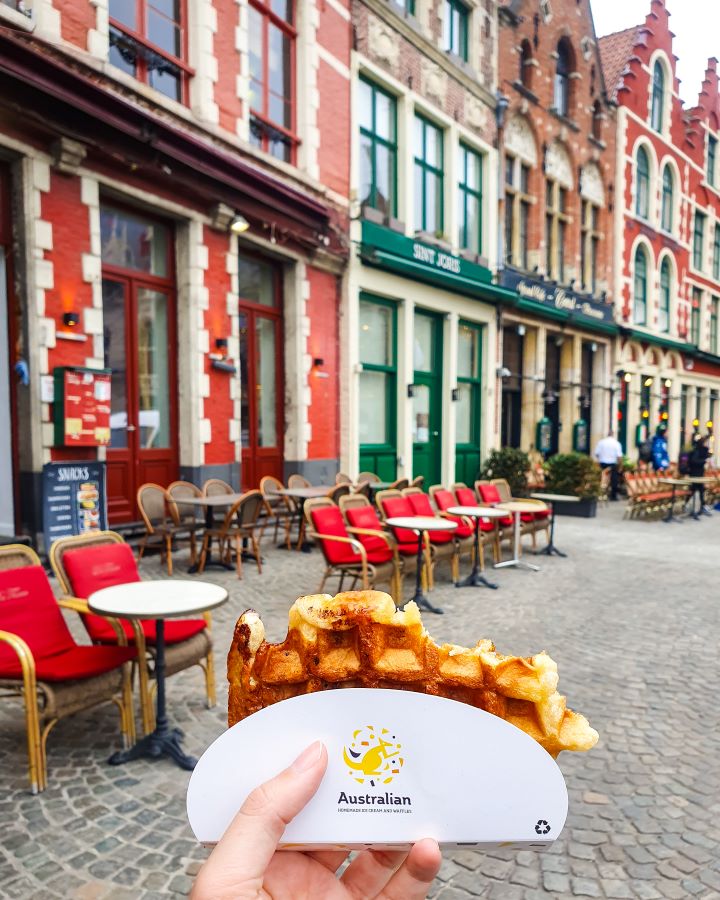
But if we’re honest you want to ignore these and go straight for the Liège waffle. These waffles are smaller and softer, in a sort of oval shape. Most people eat them plain, which was confusing to us at first. You can get them with Belgian chocolate sauce, but most people opt for a plain waffle. One day we gave in and got one plain Liège waffle, and our lives changed.
This waffle is nothing like the ones you get in the freezer isle, nothing like the ones you can make in your waffle iron and not even like what you can get in a cafe. They are deliciously sweet and have the texture of a buttery pastry. While Brussels waffles are made with a batter, Liège waffles are made with a dough. They are so gorgeous and we would go back to Belgium in a heartbeat to eat them again.
We got ours from a shop called Australian – Belgian Waffles and Ice Cream and we have no idea what makes them Australian haha. They certainly don’t have anything like that in Australia, we wish they did!
Chocolate
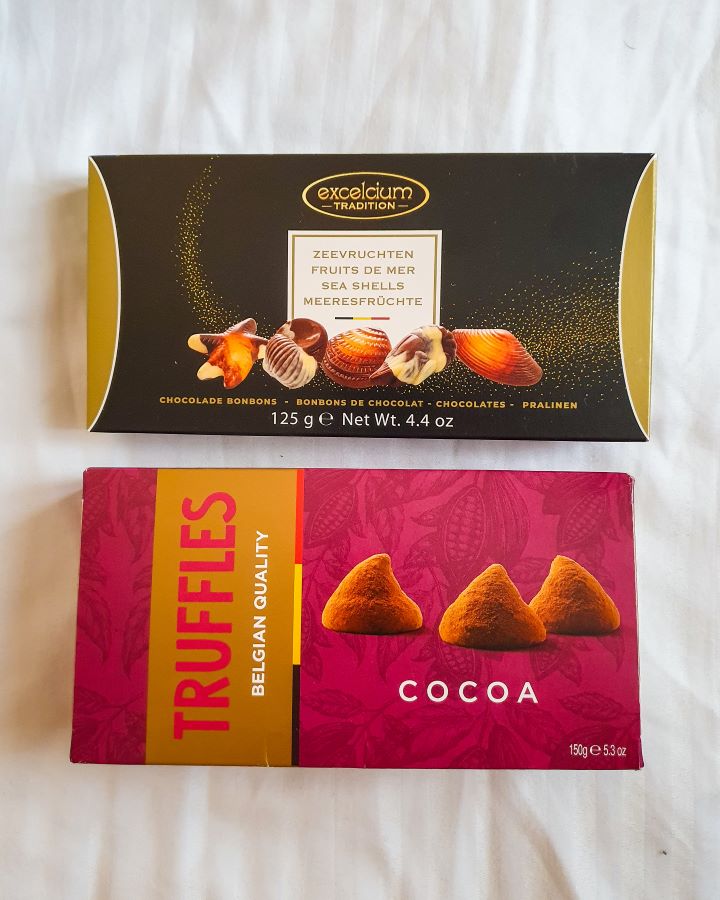
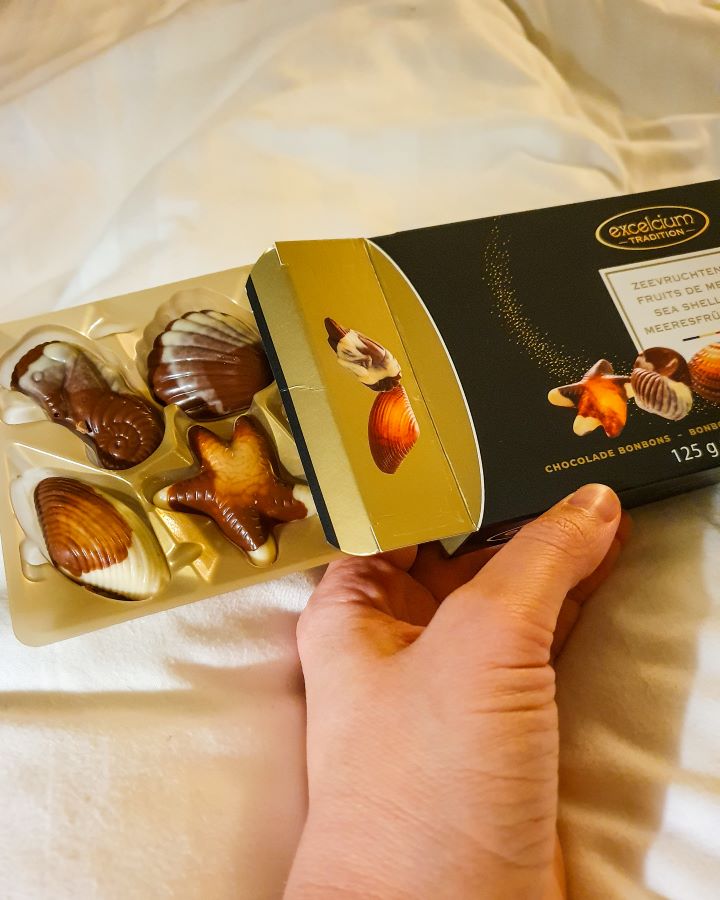
As well as waffles, chocolate is obviously a must in Belgium. There are shops everywhere and we’re sure they all sell incredible chocolate. We found two kinds that we LOVED, so we never bought anything else. The truffles are so creamy and dark, yet so sweet! They were unlike anything we’d had before, including in Switzerland.
The seashells surprised us as we thought these particular chocolates were exclusive to the brand Guylian, which we have at home. It turns out they’re just Belgian truffles. and most Belgian brands have a version. We love the ones at home, so we had to buy lots of these too.
Visit the Museums
A very popular thing to do in Bruges is visit their various museums, which we didn’t get to do as we were on a budget. There are so many to choose from and if you love museums, this may be the perfect place to spend a bit of money and have some cool experiences! Some really unique ones are:
As the name suggests, this is a museum all the about the history of the potato and Belgian fries. This museum opens 10am to 5pm every day, except on Christmas and New Years days, as well as for a week or two in early January. Check their website for exact dates of closure. Tickets cost €12 per adult.
Another indulgent museum all about the history of chocolate including chocolate making demonstrations, samples and a gift shop where you can buy even more chocolate! (Sounds like heaven). This museum opens from 10am to 5pm seven days a week, except for Christmas and New Years Days, as well as for a week or two in early January. Check their website for exact dates of closure. Entrance fees are €16 per adult. You can also buy a combination ticket with the Frietmuseum.
To round up the food and drink related museums, we’ve got the beer museum! At this museum you can learn all about the history of beer, sample m different styles of beer, and even try some of the ingredients that go into making it. It opens 10am to 6pm every day of the year except Christmas and New years day. Tickets are €14 with no tastings included and €20 with 3 tastings included. We don’t really like beer, so didn’t try any Belgian beer, but we were told that it is a lot stronger than beer in other countries. Just something to keep in mind if you do try some!
If you’re more into true crime or dark history instead of the history of foods, this museum may be more up your alley. This is a museum set in one of Europe’s oldest prisons. You can see more than 100 Medieval torture instruments and learn about the history of torture and execution. It is open 10:30am to 6:30pm every day and tickets are €7.40 per adult.
If jewels are more your vibe then look no further than the diamond museum. In this museum you will find the history of diamonds and the diamond industry in Bruges, as well as lots of beautiful diamonds to look at and a daily polishing show every day at 12:15. The museum is open every day from 10:30am to 5:30pm and tickets are around €15 per adult.
Lastly, if you’re an art lover and like a traditional art museum, then this is the museum for you. One of the most popular museums in Bruges, it houses Belgian art spanning over six centuries from Flemish artists such as Jan van Eyck, Hans Memling and Gerard David. It is open every day from 10:00am to 6:00pm in summer and 9:30am to 5:00pm in winter except Mondays. Tickets are €15 per adult.
2026 UPDATE: The Groeninge Museum will be closing on January 11 2027 for a four year refurbishment. During this time, the collection will be held at the new BRUSK museum in the heart of Bruges. It has the same opening hours as the Groeninge Museum, and tickets to BRUSK cost €20 per adult.
While all of these museums aren’t huge and won’t take a full day to look around (except maybe Groeninge if you really like art!), they are all super unique and would be a great way to spend some time in Bruges. They’re all also nice and close to the city and won’t take more than 10 minutes to get to from the centre, so they’re definitely worth checking out if you’re interested!
Final Thoughts
Bruges was one of our favourites cities we’ve been to in all of Europe. If you’ve been before or are going soon I’m sure you’ll see why. There is so much to do to keep you interested and even if you’ve run out of things to do, you’ll never get bored of just walking around the streets and admiring how gorgeous it all it.
Check out our video on our time in Belgium here: